

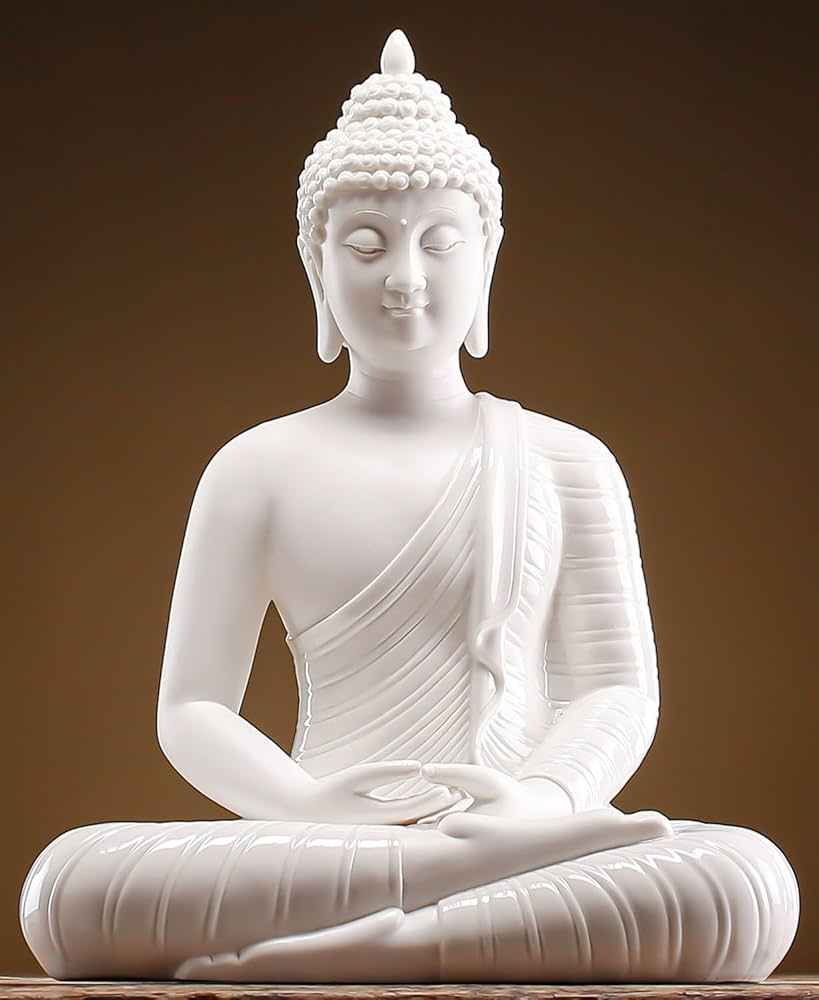
About 20 to 25 years ago, I became interested in Buddhism. There was a meditation center in my hometown, and I started going there to learn how to meditate. I read lots of books and did research online. I was fairly serious about it for a while and then I slacked off. Even though I wasn’t practicing, Buddhism was always in the back of my mind. About 6 months back I started getting serious about it again. So I thought I would write up an article about what I know about Buddhism and maybe there are readers out there that would like to know a little too. So here goes.
Something over 2500 years ago there was a guy who lived in what is now Nepal, which is north of India. His name was Siddhartha, but I’ll call him Sid for convenience’s sake. Sid was the son of the local King and grew up sheltered and living in opulence. He discovered that he had spiritual leanings and his life of luxury was not what he wanted so he went out in the world and discovered things that his father tried to keep from him. He found human suffering, disease, old age, and death. The suffering he found affected him so much that he felt there must be a way to transcend it. He tried Asceticism, which is a form of self-denial and renunciation of all worldly comforts including eating almost nothing. He practiced this for years and found himself no closer to enlightenment. Since he had grown up in a wealthy family, he knew that that was not the way either. What he discovered was that a middle way somewhere between asceticism and opulence was just the ticket. Having enough, not too much and not too little allowed him to meditate until he discovered the secret of enlightenment. The word Buddha means “Enlightened One,” and once Sid became the Buddha, he began to teach others. The movement grew, and now today there are around 300 to 500 million Buddhists in the world, all because one guy wanted to alleviate suffering. Pretty cool, huh?
In a very simplified way, I’ll tell you what Buddhism is all about. The Buddha discovered four “Truths” that represent the human condition. They are: #1, There is suffering in human life. #2, The suffering is mostly brought on by ourselves, by wanting what we don’t have, not wanting what we do have, not accepting things as they are, and not understanding the nature of reality. #3, There is a way to end human suffering. #4, They way to end suffering and bring about enlightenment is to follow the Eightfold path.
And just what is this “Eightfold” path? Well I thought you’d never ask! Again, here it is, simplified.
#1 on the eightfold path is “Right View”, or Understanding.
Right view means to learn the 4 “truths” as the Buddha explained them. It also means to understand the nature of reality. Reality 101- Everything changes. Everything. All things change always. Manmade things break down, deteriorate, fall apart, get old, disintegrate. Humans change. You are not the same as you were as a child, or a teenager, or a young adult. Opinions and beliefs change. bodies change; minds change. Cells die and are replaced by new ones, literally millions every day. All things change. We experience suffering when we cling or become attached to things and even people. Also, aversion, avoiding things we don’t like or want, causes us suffering. We suffer when we don’t want things to change, or when we do, and they won’t change in the way we want. Basically, our wanting causes us to suffer. This is Right View.
#2 The second step on the eightfold path is Right Intent.
Right intent means that you have the intention of learning, being open to change, committing to act from a place of love, understanding and self-lessness. To practice the path wisely, without greed, or anger, or any other destructive emotions. This is right intent.
#3 Right Speech is the third step.
Right speech means using your words and thoughts to promote good in your life and in the greater world. Lying, gossiping, divisive speech, coercive speech, mis-leading speech; all that is right out the window. Don Miguel Ruiz, in his book, The Four Agreements says. “Be impeccable with your word”. Say no more than is necessary for good communication and always make it the truth.
#4 Right Action
Let your behavior speak for you. What do you want the world to know about you? Let your actions speak for you. Never cause another harm with the things that you do.
#5 Right Livelihood
This is the simplest one of all. Earn your living in such a way as to never cause harm to humanity or the world.
#6 Right Effort
Focus your energy towards positive thinking and flush out the negative stuff. Also, it means to practice the Buddhist path diligently. Stick to the good, and get rid of the bad.
#7 Right Mindfulness
This one’s a little tricky. Mindfulness at its simplest means to keep your mind focused on the here and now, and not daydreaming, or ruminating about the past or future. I’ll be honest with you; this is the hardest part of the Buddhist path. We do so much inward thinking without even realizing it that once you do understand that, it becomes difficult to stop. But it can be done.
#8 Right Concentration.
At last were on the last one. Right concentration has to do with your mind. Training your mind to be steady and calm, to not be affected by the changing going on around you, to not jump from thought to thought like a monkey jumping from tree to tree. It takes some real training which is where meditation comes in. Buddhists are famous meditators. Meditation helps calm the mind, basically that’s what it’s for. The Buddha says if you practice the path you will have a calmer, kinder, happier life.
I hope I didn’t lose you and you’re still with me. Understand that this is a very simple explanation of what Buddhism is. I recommend reading some good Buddhism books and looking things up online. And practicing Buddhism doesn’t mean you have to become a monk. Unfortunately Buddhism is almost always associated with Monks in saffron or yellow robes and you never hear much about lay Buddhists. But they’re out there, as many as 300 to 500 million, in fact. And Buddhism is growing. Every day, people are waking up to the fact that our world is getting more complicated, more anxious, more stressed, and just plain harder to deal with. Buddhism brings calm and peace to your world. It’s not some crazy worshiping cult but a very good way to see reality as it is and be okay with it. It also doesn’t mean that you’ll be out of touch with the world. Buddhists today are fully engaged with the world and with all the difficulties going on. They just know how to handle it better than we do! So there you are. Now you know a little about Buddhism.
 Wind in the Trees, a haiku journal